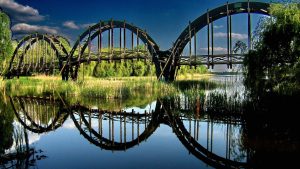

Zalaszentmárton is nestled in a valley of the Zala hills, surrounded by light forest and agricultural lands – a hidden gem amongst the hills. With rich soil and flowing water Zalaszentmárton has been inhabited continuously throughout history and local legends tell of ancient cultures, burial mounds and golden treasures. Plowing has unearthed Neolithic pottery and tool fragments from the Linear Pottery culture (c. 5500-4500 B.C.), Roman relics, medieval weapons, Turkish and modern remains. The Magyars likely settled the village early in their conquest of the area in 900, but the oldest surviving written record dates back to 1266. Throughout its known history, the village has always remained quite small- only 150-300 inhabitants.
The village’s name originates from the patron saint of its medieval church, St. Martin. Saint Martin of Tours, the Roman soldier who was born in nearby Szombathely (Savaria) in the year 316, is claimed to have visited the village during his life, and the village is part of the Via Sancti Martini cultural and pilgrimage route. Passers-by pray for St. Martin’s blessing and protection. Archeological evidence shows there was some form of Roman life in the village during St. Martin’s life- giving the legend of his visit more credibility.
From 1266 until 1299 we know it was the property of the Hahót family, a noble clan of German descent. In the 14th century it was first owned by the Szabari and then the Bánffy families. In 1403, the Ostffys became its owners. It was burned down several times during the Turkish occupation, which caused its depopulation. Its medieval church was also destroyed during these years. Local legend has it that the residents buried the church bell to protect it from the invading Turks- it has since never been found. In the early 1700s, after the expulsion of the Turks, inhabitants began to rebuild and the village fell into the possession of the abbey of Kapornak that was then headed by the Jesuits, and who rebuilt and controlled the large agricultural farm in Zalaszentmárton. Today’s church was built in 1860 on the ruins of the medieval structure in a classicist style with an added bell tower and a semicircular sanctuary. The altarpiece depicting Saint Martin was painted by József Krikler in 1886. Krikler, trained in Budapest, worked in many churches during his time and many fine pieces in the region are attributed to him.
The village had several water mills along its streams, wealthy families owned noble mansions and vast orchards that employed many of the residents. Unfortunately, one can barely find remains of any of this today.
Revolutions and World Wars spared the village with armies only passing through or passing by entirely. In World War 2, the German army retreated through the center of the village and used one cellar as a field hospital. The German artillery used our vineyard hill as an observation point to direct fire. The Russian forces advanced on neighboring Pacsa from the next village completely missing Zalaszentmárton. Only three days later were they made aware of a hidden village causing them to rush back in arms to investigate. Thankfully, the front had already moved on and nothing transpired.

Before any German or Russian soldier stepped foot into the village, the Americans had already dropped in. On November 19, 1944, two American fighter planes of the Tuskegee Airmen, the first squadron of black pilots in the U.S. Air Force, were shot down over the village. A local resident still remembers seeing the burning aircraft falling out of the sky and the parachute floating down into the forest. The village men retrieved the pilot who was tangled in a tree and brought him back to the gendarme office where he remained for a few days before being collected and shipped away. He was either Quitman Charles Walker or Roger Gaiter. This is a current mystery we are trying to decode.
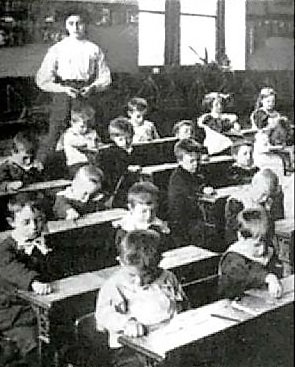
The communist era saw the village continue its history of farming and animal husbandry, even growing its population beyond 300 people. Its schoolhouse taught grades 1-8 with close to 150 children attending. The local blacksmith was still operational, as was the community ice house. The residents lived happily with many dances and gatherings here and in neighboring villages. In the early 1990s when the large co-op farm collapsed the village witnessed mass exodus as people found work in larger towns and cities.
Today the village is listed as having 74 residents but only about 55 live here on a permanent basis. The settlement enjoys a good infrastructure with full utilities, paved roads, and local government.